
Table of Contents
- How to Make a Small Room Look Bigger: Strategic Design Principles
- Small Room Color Ideas That Expand Visual Space
- Furniture Placement and Small Room Layout Ideas
- Lighting Ideas for Small Rooms
- Small Room Storage Ideas and Decluttering
- Mirrors, Reflective Surfaces, and Visual Illusions
- Room-Specific Strategies for Narrow Rooms and Bedrooms
- Rental-Friendly and Budget-Conscious Approaches
- Frequently Asked Questions
Last Updated: October 10, 2026
How to Make a Small Room Look Bigger: Strategic Design Principles
Making a small room look bigger means creating the illusion of more space through color, light, furniture placement, and smart design choices.
The most effective approach combines multiple strategies: light colors expand perception, mirrors bounce light around, and furniture scaled to the room prevents crowding. Layering these techniques together makes even genuinely small spaces feel significantly larger.
Small Room Color Ideas That Expand Visual Space
Color is your most powerful tool for making a small room look bigger. Light, continuous colors create visual flow and prevent walls from closing in.
Light Paint Colors and Color Continuity
Paint walls in light, neutral tones, whites, soft grays, warm beiges, or pale greens, which reflect light and make walls feel farther away.
Paint ceilings the same light color as walls or slightly lighter to remove visual boundaries and make the room feel taller. When the eye doesn't hit a hard color change, space expands.
Keep trim and baseboards light. Reserve darker colors for small accents only, a pillow, artwork, or single decorative object.
Color Drenching and Accent Walls
Color drenching, painting walls, trim, and furniture in the same light color family, creates visual continuity that expands perceived space.
For visual interest without shrinking the room, use a mirror or reflective surface instead of a dark accent wall.
Furniture Placement and Small Room Layout Ideas
Furniture arrangement determines whether a small room feels open or cramped; layout matters more than quantity.
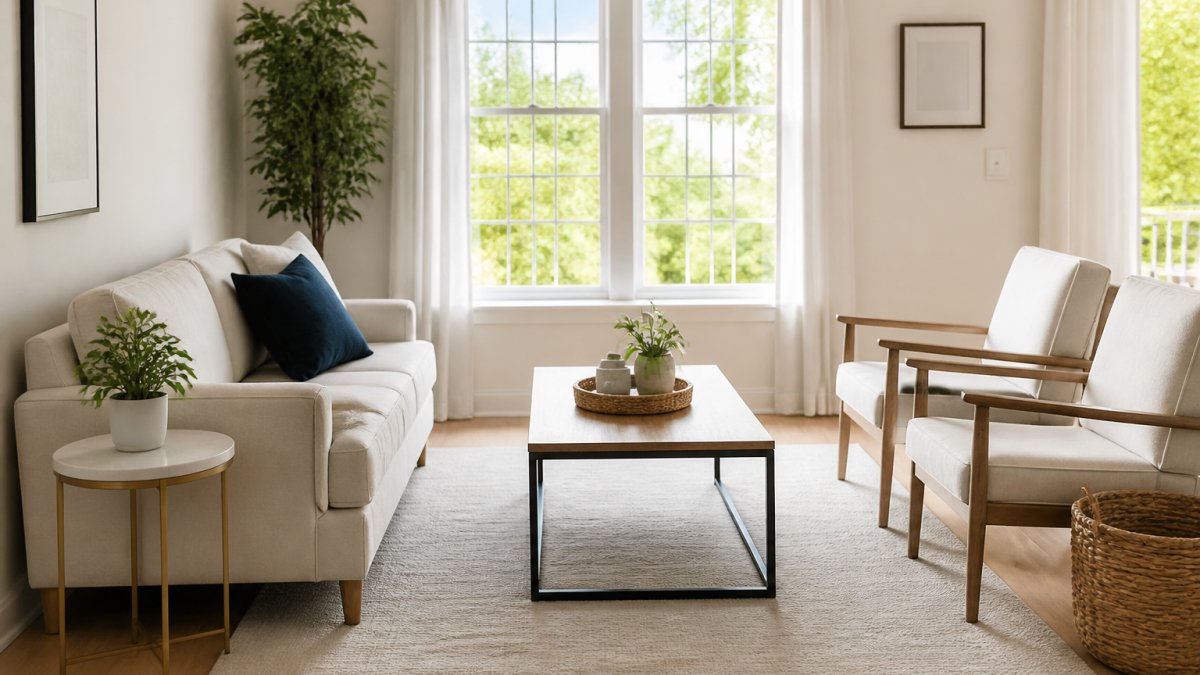
Scaling Furniture to Room Proportions
Buy furniture scaled to your room size. A full-size sectional in a 10x12 bedroom feels suffocating; a smaller sofa or loveseat lets the space breathe.
Measure your room before shopping and aim for at least 30% of floor space to remain visible and clear; this open space makes a room feel large.
Choose furniture with visible legs rather than pieces that sit directly on the floor.
Multifunctional and Space-Saving Furniture
In small rooms, every piece should earn its place. Multifunctional furniture, an ottoman with storage, a bed with drawers, or a folding desk, maximizes utility without adding bulk.
Use vertical storage: tall bookshelves draw the eye upward and make rooms feel taller. Avoid wide, squat furniture that spreads horizontally.
Traffic Flow and Open Floor Space
Arrange furniture to create a clear path through the room. Position main pieces to allow easy movement from the door to all corners.
Keep the center of the room as open as possible. Push larger pieces against walls. This single choice has more impact on perceived size than almost anything else.
Lighting Ideas for Small Rooms
Light transforms how we perceive space. Effective small-room lighting requires understanding fixture types, placement strategy, and brightness levels, not just adding more light.
Layered Lighting Strategy and Fixture Types
Use three types of lighting: ambient (overall brightness), task (focused light for activities), and accent (highlights for depth).
Ambient lighting sets baseline brightness. Combine a ceiling fixture with wall sconces or a dimmer switch.
Task lighting focuses light where needed: desk lamps, bedside lights, or vanity lights.
Accent lighting highlights artwork or reflective surfaces, bouncing illumination around the room and creating visual depth. It multiplies perceived brightness and spaciousness.
Brightness Levels and Color Temperature
Aim for 50-75 lumens per square foot for general living spaces, and 75-100 lumens per square foot for task areas.
Color temperature matters as much as brightness. Cool white light (4000K) or daylight (5000K-6500K) feels brighter and more spacious than warm white (2700K).
Use dimmable bulbs and fixtures to adjust brightness for different times of day and activities without installing multiple fixtures.
Window Treatments and Natural Light Maximization
Natural light is irreplaceable for making small spaces feel bigger. Remove anything blocking windows: heavy drapes, clutter, or furniture pushed against them all reduce brightness.
Choose window treatments that filter light rather than block it: sheer curtains, light-filtering roller shades, or cellular shades.
Position mirrors opposite or adjacent to windows to bounce natural light around the room. A large mirror (36 inches or wider) amplifies brightness and creates the illusion of additional windows.
Common Lighting Mistakes in Small Rooms
Overhead-only lighting creates harsh shadows and makes small rooms feel flat and cramped. Always layer multiple light sources.
Japandi Living Room | Ma Negative Space →
Undersized or too-dim fixtures fail to brighten the room adequately.
Warm light everywhere can make small rooms feel darker and more enclosed.
Fixtures that take up visual space (large chandeliers, bulky pendant lights) overwhelm small rooms.
Ignoring reflective surfaces wastes an opportunity to multiply light.
Small Room Storage Ideas and Decluttering
Clutter is the enemy of small spaces. Storage and organization are non-negotiable for small room design.
Clear surfaces completely: nightstands, desks, dressers, and shelves should hold only essential items. Everything else goes into closed storage.
Use vertical storage aggressively: wall-mounted cabinets, floating shelves, and tall bookcases keep items off the floor. Under-bed storage and closet organizers maximize hidden space.
Mirrors, Reflective Surfaces, and Visual Illusions
Mirrors are the most effective tool for creating the illusion of space.
Position mirrors to reflect windows, light fixtures, or artwork. Avoid reflecting clutter or dark walls. Leaning a large mirror against a wall works as well as hanging.
Glossy paint finishes, glass furniture, and metallic accents also bounce light around and add to noticeably brighter, more spacious-feeling rooms.
Room-Specific Strategies for Narrow Rooms and Bedrooms
Different room types need different approaches. A narrow hallway requires different tactics than a small bedroom.
Narrow Room Proportions
In narrow rooms, use horizontal stripes or artwork to emphasize width. Arrange furniture perpendicular to the length. A sofa facing across the narrow width makes the room feel less tunnel-like.
Mirrors on longer walls create the illusion of width. Spread lighting across the width rather than concentrating it at one end.
Bedroom-Specific Layout and Focal Points
Position the bed as a clear focal point where it's visible and balanced. Avoid pushing it into a corner; floating it slightly away from the wall creates visual space.
Keep bedroom furniture minimal: a bed, nightstands, and a dresser are usually enough. Use wall space for storage and decor rather than floor space for furniture.
Rental-Friendly and Budget-Conscious Approaches
Renters face constraints: no painting, no permanent changes, and lease restrictions. Budget-conscious homeowners need affordable solutions. Both groups can make small rooms look significantly bigger by prioritizing reversible changes with high return on investment.
Budget Tiers: Where to Invest First
Tier 1: Free or under $50 (highest impact-to-cost ratio)
- Declutter and organize ($0): Clear all surfaces completely. This single step makes small rooms feel dramatically larger. Store everything in closed storage, closets, or under-bed containers.
- Rearrange furniture ($0): Push larger pieces against walls and keep the center open. Move the bed away from corners. Reposition the sofa to face across the room's width. This changes how the room feels without buying anything.
- Add mirrors ($20-50): A large leaning mirror (36-48 inches) bounces light and creates the illusion of depth without permanent changes.
- Improve lighting ($30-100): Add a floor lamp or desk lamp to brighten dark corners. A basic LED floor lamp plugs into any outlet and creates layered lighting without rewiring.
Tier 2: $100-300 (moderate investment, high visual impact)
- Removable wallpaper ($50-150): Light colors and subtle patterns create visual continuity without permanent damage. Peels off cleanly if applied correctly.
- Renter-safe mirrors ($60-200): Adhesive-backed mirrors stick to walls without nails or drilling and remove cleanly. Freestanding mirrors on easels ($50-100) require no wall attachment.
- Lightweight, scaled furniture ($150-300): A small loveseat, compact desk, or narrow bookshelf replaces oversized pieces. Choose furniture with visible legs to create visual space underneath.
- Window treatments ($80-200): Light-filtering roller shades or cellular shades let natural light through while maintaining privacy and are often removable.
Tier 3: $300+ (larger investment, permanent or semi-permanent)
- Furniture replacement ($300-1000+): Replace oversized or dark furniture with pieces scaled to the room. A smaller sofa, platform bed, or floating desk is a permanent improvement if you own the space.
- Lighting fixtures ($200-500): Install new ceiling fixtures, wall sconces, or track lighting. This requires electrical work but creates professional, layered lighting. Homeowners benefit long-term; renters cannot do this.
- Paint ($100-300): Professional or DIY painting in light, continuous colors is the most transformative change for homeowners. Renters cannot do this.
Rental-Specific Reversible Changes
Renters need changes that leave no permanent marks and can be removed or taken to the next apartment.
Adhesive and damage-free products:
- Peel-and-stick wallpaper, Command strips, and adhesive-backed mirrors
- Tension rods for curtains, adhesive shelf liners, and decorative contact paper
- Freestanding or leaning mirrors and plug-in lighting
Furniture choices:
- Modular or sectional pieces that reconfigure for different layouts
- Furniture on casters or wheels for movability and flexibility
- Multifunctional furniture (ottoman with storage, bed with drawers) that maximizes utility without adding bulk
What to avoid:
- Permanent paint or wallpaper, nailed or drilled mirrors
- Hardwired lighting or electrical changes
- Heavy, built-in furniture
Prioritization Framework: Impact vs. Effort vs. Cost
Use this framework to decide which changes to make first:
- Start with free changes (declutter, rearrange, add a mirror). These have the highest impact-to-cost ratio.
- Add affordable lighting ($30-100). Layered lighting is one of the highest-impact changes and requires no permanent installation.
- Invest in mirrors and removable wallpaper ($50-200 total). These create visual expansion without permanent damage.
- Replace oversized furniture ($150-300+) only if your budget allows and pieces are truly overwhelming.
- Paint or install fixtures (homeowners only, $100-500+). These are the most transformative but require ownership or landlord approval.
For renters on a tight budget, prioritize: declutter, rearrange, add mirrors, improve lighting. These four changes cost under $150 combined and create dramatic improvement.
Frequently Asked Questions
What colors actually make a small room look bigger?
Light paint colors like soft whites, pale grays, and warm creams reflect light and create airiness. Keep color continuity across walls and trim to avoid breaking up the space visually. Avoid dark colors on all walls, though a single dark accent wall can add depth if balanced with light surrounding colors. Ceiling color matters too: painting ceilings the same light tone as walls makes them feel higher.
How should I arrange furniture in a small room to maximize space?
Choose furniture scaled to your room's proportions, not oversized pieces. Float furniture away from walls to create defined zones and improve traffic flow. Use multifunctional pieces like storage ottomans or nesting tables. Keep at least one wall mostly clear to maintain open floor space. Arrange pieces to establish a focal point, drawing the eye upward with vertical elements rather than spreading items horizontally.
Do mirrors really make a small room look bigger?
Yes, mirrors and reflective surfaces create visual depth by bouncing light around the room. Position mirrors opposite windows to amplify natural light, or across from light fixtures to distribute brightness. Large mirrors work better than several small ones for creating spatial illusion. Avoid placing mirrors directly facing each other, which can feel disorienting.
Can I use these strategies in a rental apartment without painting?
Absolutely. Rental-friendly options include removable wallpaper, temporary wall decals, and peel-and-stick solutions for color changes. Focus on furniture placement, decluttering, mirrors, and layered lighting, which require no permanent changes. Rugs define zones and add color without commitment. Window treatments like sheer curtains maximize light. These reversible changes work just as well as paint for making small spaces feel larger.