
Table of Contents
- Step 1: Set Design Priorities and a Spending Plan
- Step 2: Declutter and Rearrange Before You Buy
- Step 3: Use Budget Room Layout Ideas That Fit Your Space
- Step 4: Try Free Room Design Tools and Templates First
- Step 5: Apply Cheap Room Makeover Ideas That Deliver Visual Impact
- How to Make a Room Look Expensive on a Budget
- Step 6: Build a Prioritized Shopping List and Spending Plan
- Step 7: Rental-Friendly and Reversible Upgrades
- Frequently Asked Questions
Last Updated: October 19, 2026
Step 1: Set Design Priorities and a Spending Plan
The most important move in learning how to design a room on a budget happens before you spend a dollar: decide what the room must do, then split your money to match. First-time homeowners and renters alike often skip this step and end up with a pretty room that fails at daily life. Start with function, then fund it.
Write down the three things the room must handle. A guest bedroom might need sleep, storage, and a work surface. A living room might need seating for four, a TV wall, and a spot for kids' toys. Rank them, and let the top one get the biggest slice of your budget.
A common approach to allocation looks like this:
- Big-ticket furniture: the largest share, since replacing it later costs the most
- Paint and lighting: a smaller but high-impact slice
- Textiles and accessories: the smallest share, easiest to swap later
A Realistic Room-by-Room Budget
Budget ranges shift by room, so plan per space instead of one lump sum. A guest bedroom that gets used twice a year deserves less than the living room you sit in nightly. Set a ceiling for each room, write it down, and treat it as fixed. When one line item runs over, pull from another line in the same room rather than the total. That single habit keeps a room makeover on track.
Step 2: Declutter and Rearrange Before You Buy
Decluttering and rearranging come before any purchase because they reveal what the room already has. Empty the space, sort belongings into keep, donate, and toss piles, and only put back what earns its spot. A cleared room shows you the true size of the space and the furniture layout that fits it.
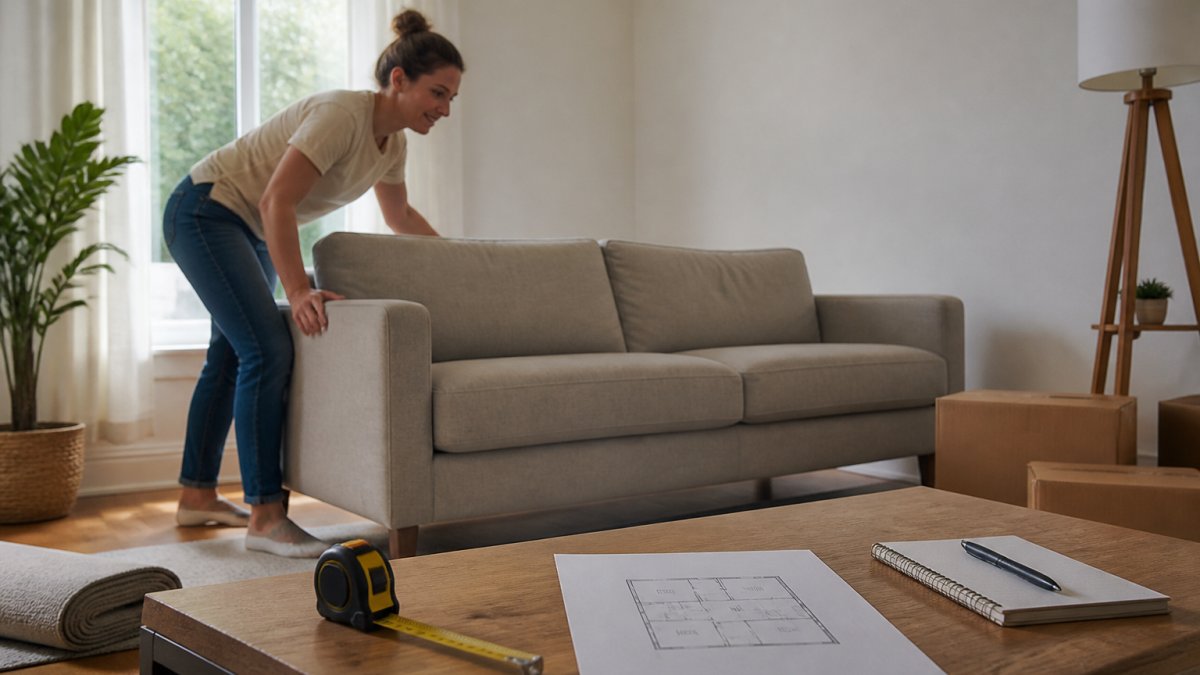
Once the clutter is gone, rearrange furniture using what you own. Try the sofa on a different wall. Pull chairs away from the edges. A fresh furniture layout costs nothing and often fixes a room that felt cramped or awkward.
Step 3: Use Budget Room Layout Ideas That Fit Your Space
Good budget room layout ideas start with measurements, not inspiration photos. Measure the room's length and width, note door swings and window placement, and mark traffic paths. Then test layouts on paper before you move a single piece of furniture.
Small-Room Layouts With Measurements
Small rooms reward planning in inches. Keep at least 30 inches of clear walkway between furniture pieces so people can pass. Leave 14 to 18 inches between a sofa and coffee table for legroom. Float the sofa a few inches off the wall to make a small room feel intentional, not shoved into a corner. These numbers turn a cramped room into a functional space without buying anything new.
Step 4: Try Free Room Design Tools and Templates First
Free room design tools let you test a layout or color scheme before you commit money to it. Many retailers and design apps offer free planners where you drop in room dimensions and furniture footprints. Use them to catch mistakes early, when fixing them is free.
This is also where a pre-made plan saves time. SpaceKits offers downloadable room templates built by licensed interior designers, with floor plans, color codes, mood boards, and clickable shopping lists. You can follow a plan exactly or customize furniture and colors to fit your personal taste, which removes the guesswork of starting from a blank canvas.
Step 5: Apply Cheap Room Makeover Ideas That Deliver Visual Impact
The cheapest room makeover ideas focus on the surfaces people notice first: walls, light, and the small details. Paint, lighting, and fixture swaps deliver the biggest visual impact per dollar, so spend your limited budget there before you touch furniture.
Paint, Lighting, and Fixture Swaps
A fresh coat of paint transforms a room for the price of a can and a weekend. Light colors make a room look larger and brighter, while one accent wall adds depth without repainting everything. Swap dated light fixtures for simple updated ones, and repaint trim for a crisp finish. Layer in curtains, textiles, and greenery to soften the space. For renters, removable wallpaper and plug-in sconces deliver the same effect and reverse cleanly at move-out.
How to Make a Room Look Expensive on a Budget
Making a room look expensive is about editing, not spending. Fewer, better-chosen pieces read as high-end; a crowded room reads as cluttered. Use a tight color palette of two or three tones, hang curtains high and wide to make ceilings feel taller, and add one statement piece instead of many small ones.
Mix secondhand finds with new items for an eclectic, collected look. A thrifted chair beside a clean-lined sofa looks curated, not cheap. Add a gallery wall of your own art or framed prints for personality at low cost. The goal is a room that looks designed, and design is mostly restraint.
Step 6: Build a Prioritized Shopping List and Spending Plan
A prioritized shopping list turns a wish list into a spending plan. List every item the room needs, then rank each one by how much it changes the room's function and look. Buy in rank order and stop when the budget runs out. This keeps you from spending your whole budget on accessories before you've solved seating.
A simple priority order works for most rooms:
- Function first: seating, bed, or storage the room can't work without
- High-impact surfaces: paint, lighting, curtains
- Comfort and texture: rugs, throw pillows, blankets
- Finishing details: art, plants, decorative accessories
Step 7: Rental-Friendly and Reversible Upgrades
Renters can design a room on a budget without losing a deposit by choosing reversible upgrades. Removable wallpaper, tension rods for curtains, plug-in light fixtures, and freestanding shelving all transform a rental and come down cleanly. Area rugs protect floors and define zones. Furniture that doubles as storage keeps small rentals functional. Every choice here reverses at move-out, so you get the look without the permanent commitment.
Frequently Asked Questions
What should I buy first when designing a room on a budget?
Start with the pieces that anchor the room: a sofa or bed, a rug sized to the seating area, and lighting. These set the layout and scale everything else follows. Buy those three before accessories. A common mistake is spending the budget on decor first, then discovering the sofa does not fit the wall. SpaceKits templates include floor plans and clickable shopping lists across budget, mid, and investment tiers, so you can see the order of purchase before spending anything.
Where can I design my room for free?
Free room design tools include retailer planners and basic layout apps that let you drop furniture footprints into a measured floor plan. They work well for checking fit, but they rarely solve color, styling, or shopping decisions. A middle path is a pre-designed template: SpaceKits offers the full collection of 49 templates for $299.00, and each includes floor plans, paint colors, mood boards, and shopping links. That gives you a professional starting point without a designer's hourly fee.
How do I make a room look more expensive on a budget?
Three moves do most of the work. First, repaint trim and doors in a fresh semi-gloss white, which costs little and reads as crisp and maintained. Second, swap dated light fixtures and switch plates for simple updated versions. Third, hang curtains high and wide so the window looks larger. Add one larger rug instead of two small ones. These changes cost little but change how the whole room reads.
Can I design a rental room on a budget without permanent changes?
Yes. Removable peel-and-stick wallpaper, tension rods for curtains, plug-in sconces, and large area rugs cover the big visual surfaces without touching the walls. Command strips hold gallery walls and shelving. Keep paint and fixture swaps for spaces you own, and put the rental budget into textiles, lighting, and layout instead. Everything listed here reverses in an afternoon and moves with you to the next place.
Designing a room on a budget comes down to planning before spending, and that's exactly where SpaceKits helps. Our downloadable templates give you designer floor plans, color codes, mood boards, and clickable shopping lists in one place, so you can skip the guesswork and start with a real plan. Explore the full collection of 50 templates across 10 rooms for $299, customize the furniture and colors to your taste, and get started with SpaceKits today.