
Last Updated: October 26, 2026
Quick Summary
The best ways to furnish a new home start with measuring every room, doorway, and window, then setting a room-by-room budget and buying essentials in a deliberate sequence rather than all at once. To furnish a new home affordably, spend on daily-use pieces like your mattress and sofa, save on items you will replace, and delay decor until the functional layer is done.
- Leave at least 36 inches of clear circulation in main walkways and 18 inches between a sofa and coffee table.
- Build a four-tier checklist covering sleep and sit, store and work, function, then finish.
- Budget roughly $8,000-$20,000 total for a one- or two-bedroom home, with 30% going to the living room.
- Furnish room by room in this order: bedroom, living room, dining and kitchen, office, then entry.
- Order custom pieces eight to twelve weeks out, since most furniture lead times run two to eight weeks.
Table of Contents
- Start With a Plan, Not a Shopping Cart
- The New Home Furniture Checklist
- Essential Furniture for a First Home
- How to Furnish a New Home on a Budget
- Furnishing a House Room by Room
- Furniture Sizing Rules and Delivery Logistics
- Sustainable and Secondhand Furnishing Decisions
- Choose a Ready-Made Design Plan and Start This Week
- Frequently Asked Questions
Start With a Plan, Not a Shopping Cart
The best ways to furnish a new home start with a tape measure, not a credit card.
Furnishing a new home is the process of measuring each room, ranking spaces by daily use, setting a room-by-room budget, and buying essential pieces in a deliberate sequence rather than all at once.
Below, we walk through the full method: measuring, budgeting, buying room by room, and handling delivery. The approach works whether you have one weekend or one year.
Measure Rooms and Map Circulation Before You Buy
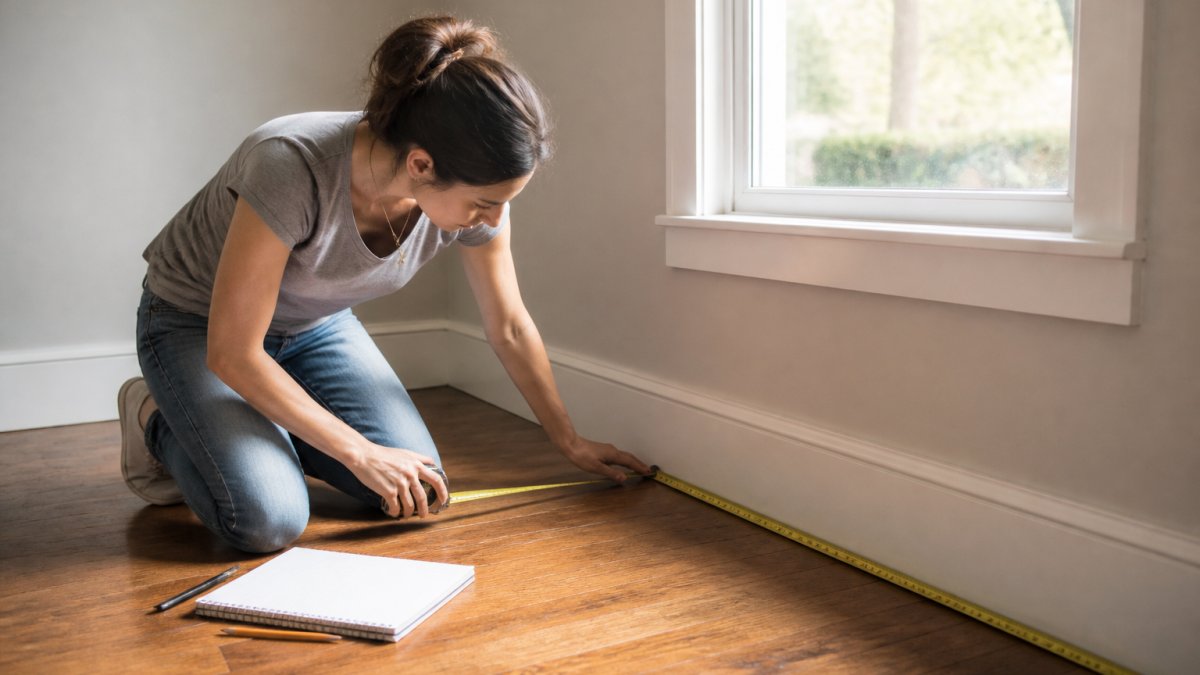
Measure every wall, doorway, and window before you shop, and map walkways before you choose furniture. Our guide on how to measure a room for furniture covers the tape-measure method step by step.
The New Home Furniture Checklist
A new home furniture checklist keeps you from buying the same item twice or forgetting the boring essentials. Build it in four tiers, then buy down the list as budget allows.
- Tier 1, sleep and sit: bed frame, mattress, sofa, dining table and chairs
- Tier 2, store and work: dresser, shelving, desk and chair if you work from home
- Tier 3, function: lighting, curtains or blinds, rugs, trash cans, laundry storage
The checklist should live in one document with measurements and prices next to each line. When a sale appears, you check the list instead of browsing.
Essential Furniture for a First Home
Essential furniture for a first home is the short list you would replace first if it broke: a bed, a sofa, a dining surface, and somewhere to store clothes.
Prioritize daily-use spaces over guest rooms. A guest bedroom that hosts four nights a year does not deserve a furniture budget before your living room does.
Watch out: buying a full matching set in one weekend locks in a style before you have lived in the space.
How to Furnish a New Home on a Budget
To furnish a new home on a budget, separate the purchase into three tiers: spend on items you use daily, save on items you will replace, and wait on anything decorative. Most overspending happens in the third category, because decor is the easiest thing to buy on impulse and the least likely to affect how the home functions.
A structured plan helps here. Our 7-step plan for designing a room on a budget walks through sequencing purchases so the money lands on the pieces that matter.
A Realistic Room-by-Room Budget With Price Ranges
Set a total budget first, then split it by room according to daily use. Percentages alone are hard to shop with, so translate them into dollar ranges.
| Room | Share of budget | Typical total range | What it covers |
|---|---|---|---|
| Living room | 30% | $2,400-$6,000 | Sofa ($800-$2,500), coffee table ($150-$600), rug ($200-$800), lighting ($100-$400) |
| Bedroom | 25% | $2,000-$5,000 | Bed frame ($300-$1,200), mattress ($500-$2,000), dresser ($250-$900), linens ($150-$400) |
| Dining | 15% | $1,200-$3,000 | Table ($400-$1,500), chairs ($100-$300 each), pendant light ($100-$400) |
| Home office | 15% | $1,200-$3,000 | Desk ($200-$800), chair ($150-$600), shelving ($100-$400) |
| Entry and storage | 10% | $800-$2,000 | Console ($200-$700), hooks ($30-$150), shoe storage ($80-$300) |
| Decor and finish | 5% | $400-$1,000 | Art, mirrors, plants, throw pillows |
Those bands assume a total furnishing budget in the roughly $8,000-$20,000 range for a one- or two-bedroom home.
Adjust the percentages to your household. Before you commit, review which budget-friendly home decor retailers are worth your money so the same budget stretches further.
Quality Tiers and What They Buy You
Within each range, quality tier matters more than brand. At the low end, expect particleboard and veneer, which are fine for a first apartment but rarely survive a second move.
A practical rule: buy the items you touch daily, mattress, sofa, desk chair, one tier above the rest. Those are the pieces where cheap construction shows up fastest as sagging, squeaking, or discomfort.
Furnishing a House Room by Room
Furnishing a house room by room beats furnishing it all at once because it spreads cost, lets you learn how you use each space, and keeps decisions reversible.
The order that works for most households: bedroom, living room, dining and kitchen, then office, then entry. If any room is tight, our guide to designing small apartment layouts that work covers furniture arrangement for constrained floor plans.
Furniture Sizing Rules and Delivery Logistics
Furniture sizing and delivery logistics decide whether a good plan survives contact with your front door. Measure the doorway width, stairwell turn, and elevator dimensions before ordering anything larger than a nightstand. The measurement that matters is the narrowest point on the entire path from truck to room, not the room itself.
Sizing Rules That Prevent Costly Mistakes
- Sofas need roughly 36 inches of clearance in the walkway in front of them
- Dining tables need 36 inches from table edge to wall for chair pull-out
- Rugs should extend at least 6 inches beyond the sofa on each side
- Beds need 24 inches on the access side for making the bed
Measure the diagonal of any large piece against your tightest turn. A sofa that is 84 inches long and 38 inches deep will not clear a 30-inch stairwell turn no matter how it is tilted, and delivery crews will leave it curbside rather than damage it.
A Delivery and Assembly Timeline
Most furniture lead times run two to eight weeks, and custom upholstery can run 10-16 weeks. Build the timeline backward from your move-in date:
- Eight to twelve weeks out: order custom or made-to-order pieces (sofas, sectionals, dining tables).
- Four to six weeks out: order in-stock furniture and confirm delivery windows. Ask whether the retailer offers room-of-choice placement or curbside only, curbside delivery on a third-floor walk-up is a different job than you planned for.
- One to two weeks out: confirm access measurements and note any building rules (elevator reservations, loading-dock hours, certificate-of-insurance requirements for delivery crews).
- Delivery week: schedule assembly for the same week so boxes do not sit in your hallway for a month. Book a handyman in advance if the retailer does not assemble.
Keep a temporary essentials kit for the first nights: an air mattress or folding cot, a few folding chairs, basic cookware, and a lamp. Those items bridge the gap while the real furniture is in transit and cost far less than rushing a bad purchase.
Sustainable and Secondhand Furnishing Decisions
Secondhand furniture is the fastest way to cut furnishing costs and keep usable pieces out of landfills. Charity shops, estate sales, and local marketplaces carry solid wood pieces that outlast new particleboard at a fraction of the price.
Inspect joints, drawer glides, and upholstery before buying used. Avoid upholstered items with lingering odors or visible pest damage, and check that any painted piece is stable.
Choose a Ready-Made Design Plan and Start This Week
A ready-made design plan removes the slowest part of furnishing: deciding what goes where. Instead of starting from a blank page, you follow a licensed designer's layout, palette, and shopping list, then swap pieces to suit your taste.
SpaceKits offers downloadable room templates built by licensed interior designers, each including floor plans, color codes, mood boards, and clickable shopping lists. The Vol I. Collection bundles 49 templates across 10 rooms in five styles for $299. Individual room kits start at $18, including the Japandi Foyer and the Quiet Luxury Living Room. If you want a beginner-friendly option, our customizable room design kits guide explains how to start.


Frequently Asked Questions
What should you buy first when furnishing a new home?
Buy the pieces you use every day before anything decorative. A bed, a sofa, a dining table, and window coverings come first because you cannot function well without them. Wait on rugs, art, shelving, and accent chairs until you have lived in the space for a few weeks. Living in a room first shows you where the light falls, where you actually sit, and which walkways need to stay clear. That short delay prevents expensive mistakes on items that look good in a showroom but crowd your real layout.
How do you furnish a new home on a budget without it looking cheap?
Spend where the eye lands and save where it does not. Put money into the sofa, the bed frame, and the dining table, then buy budget-friendly side tables, lamps, and textiles. A single well-made anchor piece lifts an entire room. Mix in secondhand finds for bookshelves and accent seating, and keep the color palette tight to three tones so mismatched price points read as intentional. A structured plan with clickable shopping lists across budget, mid, and investment tiers keeps spending controlled while the finished room still looks considered.
How much does it cost to furnish a new home?
Cost depends on how many rooms you fill and how fast. Doing a whole house at once multiplies those figures fast. Most first-time buyers do better furnishing two or three priority rooms properly and adding the rest over six to twelve months, which spreads the cost and lets you learn how each room actually gets used.
How do you furnish a home room by room?
Rank rooms by daily use, then finish one before starting the next. The bedroom and living room usually come first, followed by the dining area, then the home office or guest room. Complete each room to about 80 percent, meaning the core furniture, lighting, and one layer of texture, before moving on. A finished room gives you a visual reference for the rest of the house, so your palette and furniture scale stay consistent instead of drifting room to room.
Should you furnish your whole home at once?
Rarely. Buying everything in one pass locks you into decisions before you know how the space works and usually drains the budget on filler pieces. A staged approach, with essential furniture first and decorative layers over the following months, costs less overall because you buy fewer mistakes. It also keeps your home livable during the process. If a deadline forces speed, such as a move-in date, prioritize the rooms you sleep and eat in and leave spare rooms empty until the pressure lifts.
How do you choose furniture that fits your space?
Measure the room, then measure the walkways. Leave at least 30 inches of clearance for main paths and 18 inches between a sofa and coffee table. Tape the footprint of each piece on the floor before ordering so you can see how the room feels with it in place. Check door widths and stair turns for delivery, and confirm ceiling height for tall bookcases. A ready-made design plan with a floor plan and furniture layout removes most of this guesswork, especially in oddly shaped rooms.
Furnishing an entire home from an empty floor plan is slow, expensive, and easy to get wrong without a professional layout to follow. SpaceKits gives you licensed designer plans with floor plans, paint colors, and clickable shopping lists, all in one instant download. Get started with SpaceKits and furnish your new home room by room with a plan you can actually follow.
